
By Timo Autto, a lifelong resident of the Arctic sky.
A trained nature photography professional and Northern Lights guide with deeplocal knowledge of Lapland’s wilderness.
Dreaming of seeing the magical dance of the Northern Lights in Rovaniemi? It’sat the top of every traveler’s bucket list – a moment that stays with you forever. But one question always comes first: when should you come?
.jpg)
The best time to see the Northern Lights in Rovaniemi is from late August to early April. The darkest and most active months are September, October,February, and March.
The truth is, every season is a little different. Even the best plan needs atouch of luck, but with the right guide like me, you can maximize your chances of success when chasing this legendary and ever-changing phenomenon. Here’s a clear month-by-month guide to help you plan your perfect aurora adventure.
Myth Buster: Cold Doesn’t Create Auroras
Let’s start with a common myth. Many people, especially locals, believe it hasto be freezing cold for the aurora to appear. It doesn’t. The Northern Lights are caused by charged particles from the Sun colliding with gases in Earth’supper atmosphere about 100 kilometers above the ground. This process has nothing to do with temperature at ground level.
What really matters is a clear, dark sky. High-pressure systems often bring cloudless nights, which is why people associate cold weather with good visibility. But you can see stunning auroras on a mild September evening. Remember: the real enemy isn’t the cold, it’s the clouds.
People also see the aurora differently. Our eyes vary in sensitivity to color and light. Some people perceive rich greens and purples, while others see softer shades. That’s why a camera can often reveal colors and layers that the human eye cannot.
Auroras can appear as slow, flowing ribbons or fast-moving waves of light,depending on changes in the electromagnetic field high above Earth.
When evaluating the different periods, several factors (Darkness, Clear Skies, Snow Cover, and Peace & Quiet) were rated on a 1–5 scale.
Beyond the Calendar: Three Factors That Can Make or Break Your Night
1. The Moon – Your Beautiful Rival
A full moon can be bright enough to wash out weaker auroras. The best time to visit is during the new moon, when the sky is naturally darker.
Local’s tip:
“Sometimes we use hills or the shape of the terrain to block the moonlight, but seeing the moon and the aurora together is an unforgettable experience. A bright moon can soften the contrast of the lights, so we often choose spots where the landscape helps reveal their true colors.”
2. Light Pollution – The Real Enemy
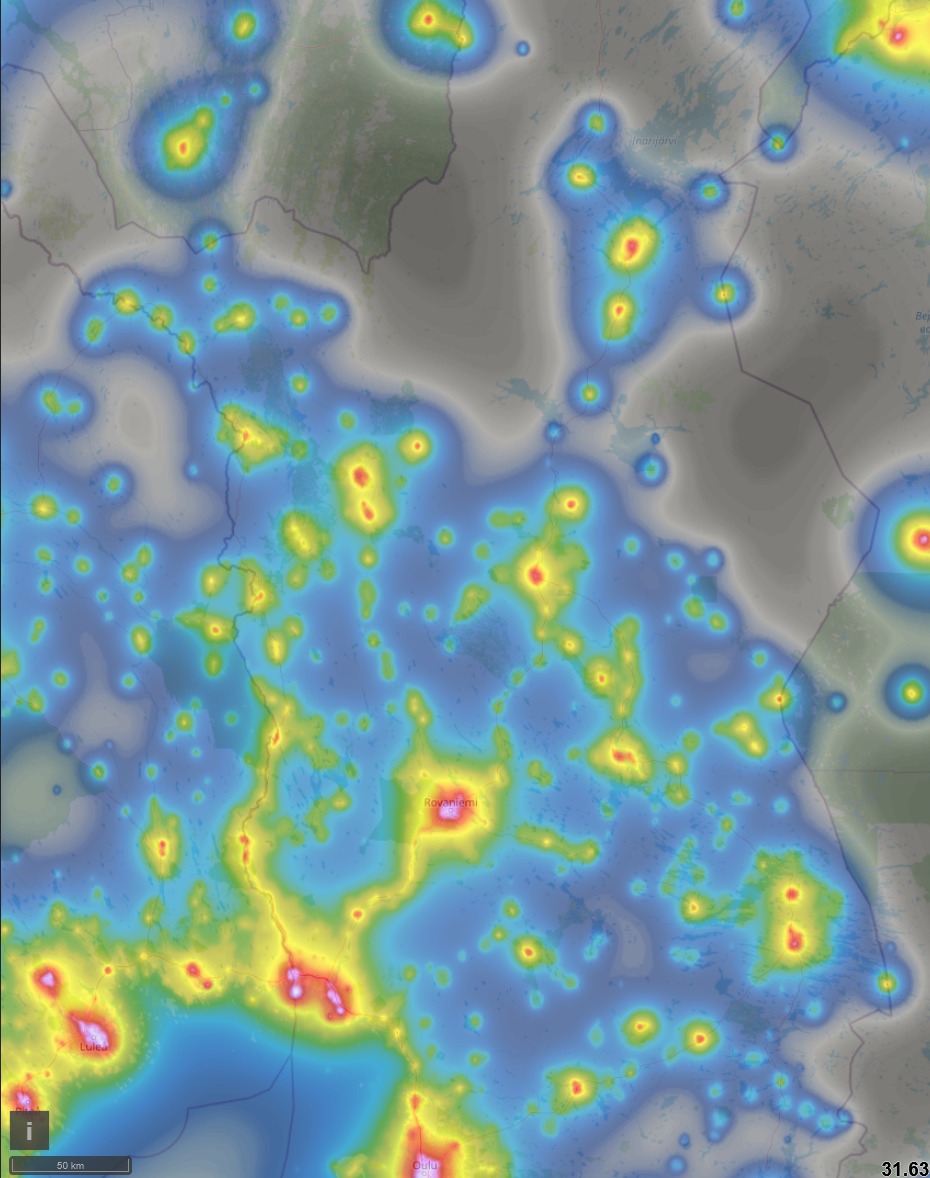
You won’t see a great aurora show in town. Streetlights hide the subtle tones and contrast of the sky.
Local’s tip:
“We take our guests at least 30 to 50 kilometers away from Rovaniemi’s city lights. A dark sky not only makes the aurora easier to see, it also makes the experience more powerful. Colors appear richer and more vivid in the wilderness, far from artificial light.”
3. Solar Activity – More Than the KP Index
The KP index measures geomagnetic activity, but it’s not the whole story. An experienced guide also tracks other values like the BZ component, which shows the orientation of the solar wind’s magnetic field. When BZ turns negative, charged particles are more likely to enter Earth’s atmosphere and create strong auroras.
Too many people rely on forecast apps alone, but a successful night is always a mix of good timing, clear skies, and local knowledge.
Local’s tip:
“The most important thing is to find a clear sky. Once we have that, we can fine-tune our plan based on the activity. Forecasts are helpful, but real aurora chasing is about experience and reading the Arctic night.”
Part 2 – The “Secret” Camera Settings
Shooting Mode
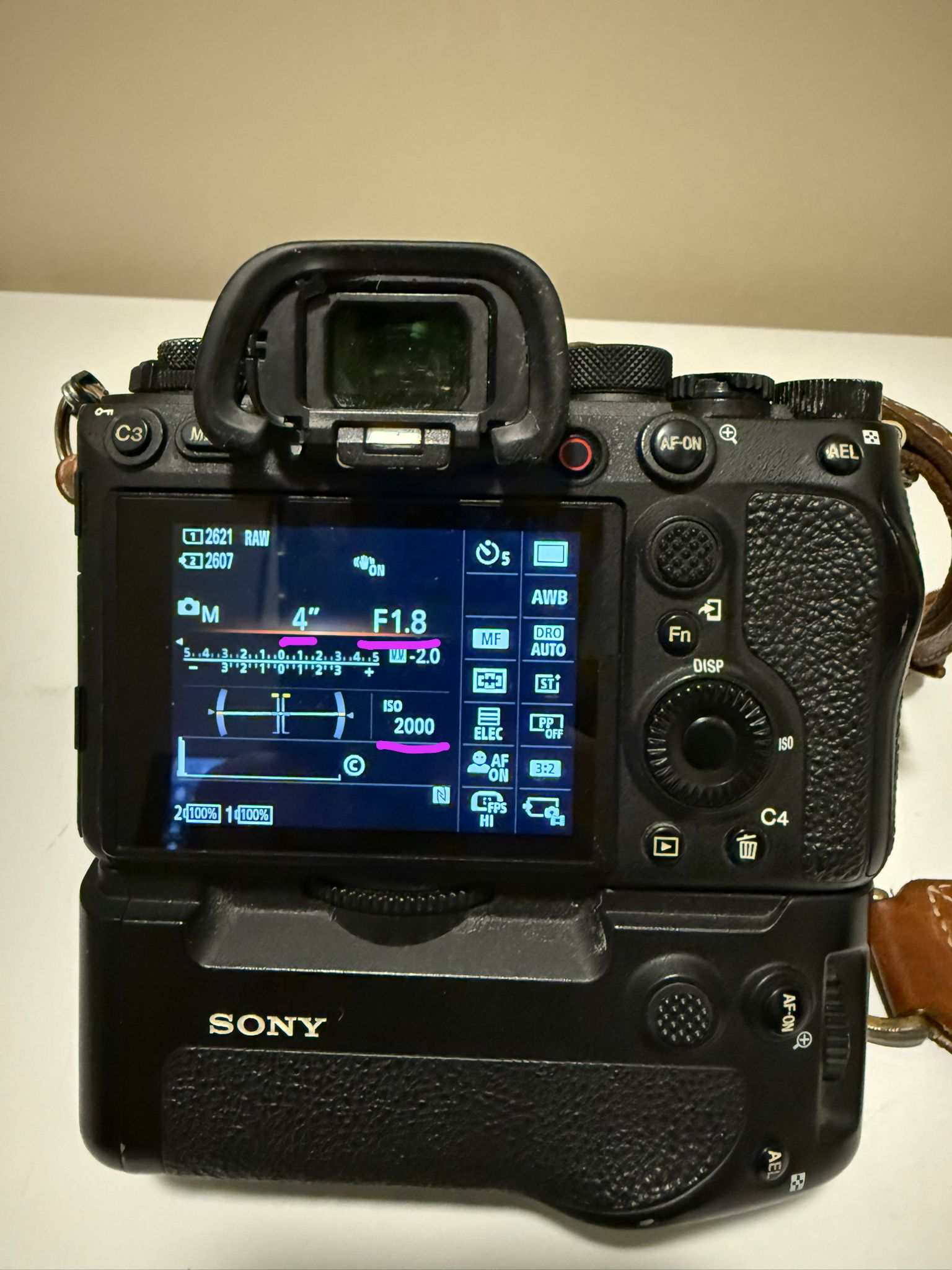
Use Manual Mode (M) so you can control shutter speed, aperture, and ISO yourself.
Aperture
Set your lens as wide open as possible – for example, f/1.8 or f/2.8. The lower the number, the more light hits the sensor.
Shutter Speed
Your exposure time depends a lot on your equipment. With my gear, I usually shoot between 2 and 8 seconds, depending on how bright and fast the aurora is. Longer exposures will start to draw little trails behind the stars, which doesn’t usually flatter an aurora photo, but everyone is free to experiment.
ISO
Know your camera. Understand how far you can push the ISO before noise becomes a problem. A good starting point is ISO 1600–3200, but modern cameras can often handle ISO 6400 surprisingly well.'
Part 3 – Composition Turns Photos into Art
Once your technique is in place, it’s time to tell a story. A photo of just the sky is beautiful, but a photo that shows where you were when it happened is unforgettable.
A strong foreground brings your image to life:
- Snow-covered trees or a distant fell silhouette
- A glowing kota hut in the forest
- A frozen lake reflecting the lights
- A person standing perfectly still, looking up in awe
Location Is Everything
Where you stand matters more than what camera you use. The landscape, direction, and horizon can turn a good moment into an extraordinary one.
Local’s tip:
“The difference between a good aurora photo and a breathtaking one is often thelocation. We know the quiet fells, lakes, and forests of Lapland – the placeswhere the sky is truly dark and nothing competes with the light above.”
Sometimes, You Can Just Forget the Camera
There are nights when it’s worth simply putting the camera down. That said, my personal opinion is that you can often get more out of the experience through your camera. Modern sensors capture colors and light far better than the humaneye. Photographing the aurora can feel like building a piece of the universe together with nature itself.
That’s why on every private tour with The Lapland Standard, you can let a professional handle the photography for you. We’ll take the portraits and landscape shots while you focus on what truly matters – living the moment.
Finally – Do You Want Photos That Truly Capture the Experience?
The Northern Lights sit at the top of every world traveler’s bucket list, amoment most people dream of seeing once in their lifetime. And when that moment comes, your memories deserve to match the magic.
We’ll make sure you go home with high-quality photos taken by a professionalnature photographer who knows how to bring the Arctic night to life. Your guideis not only a local photographer but also a wilderness expert who lives andbreathes light, even during the darkest Polar Night.
Would you like to take home a memory that’s truly one of a kind? That’s our standard.
See Our Private Aurora Tours
Contact Us to Plan Your Custom Photo Adventure

Let's plan together
Our passion is crafting one-of-a-kind experiences. The given examples are just the beginning. If you have a special request or a unique idea, we would love to build a custom itinerary just for you.
You can contact us multiple ways, use chat button in the corner to contact us directly, or call/whatsapp +358 40 538 0000 or timo@thelaplandstandard.com

.png)

